需先自行按 pytorch.org 指引安装 PyTorch,仓库不含环境依赖;AI 导师需额外用 npx 安装 torchleet-mcp 并配置到 MCP 客户端;作者明确反对直接把题丢给 GPT 求解。

TorchLeet
ExorustMIT活跃维护用 PyTorch 从零手写实现 65 道大厂 ML/AI 面试真题,配 Jupyter Notebook、自动评分器和 MCP AI 导师,适合系统刷题备战机器学习面试。
LeetCode for PyTorch — 65 ML/AI interview problems from real interviews at Google, Meta, Anthropic. Jupyter notebooks, an auto-grader, and an MCP AI tutor.
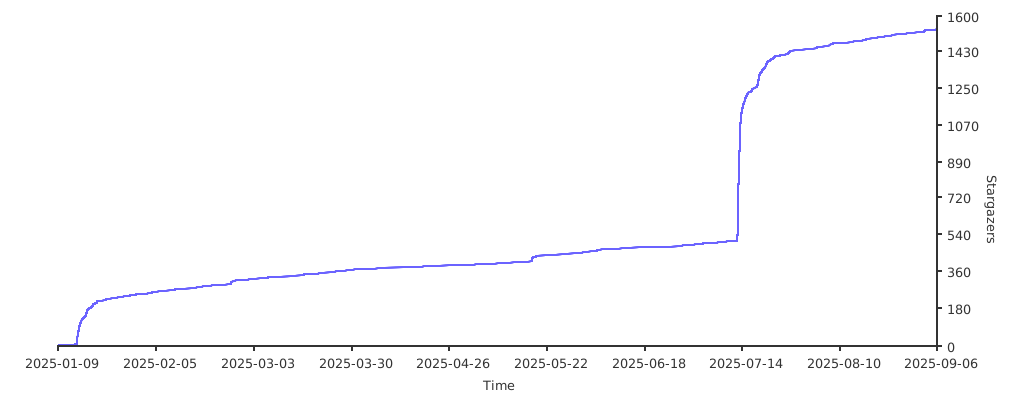
暂无版本2,629star +9 / 7 天327fork同步于 2026-11-10 05:42 UTC
git clone https://github.com/Exorust/TorchLeet.git
cd TorchLeet
jupyter notebook torch/basic/lin-regression/lin-regression.ipynb 硬件要求按 README 说明
README 未说明显存或 GPU 要求;题目以 Jupyter notebook 形式运行,需本地安装 PyTorch,部分题涉及 CUDA 混合精度训练。
用真实大厂面试题练 PyTorch 的题库,68 道 Jupyter 题带解答和 AI 导师
用 PyTorch 从零手写实现 65 道大厂 ML/AI 面试真题,配 Jupyter Notebook、自动评分器和 MCP AI 导师,适合系统刷题备战机器学习面试。
核心能力
- 68 道来自 Google、Meta、Anthropic 等真实面试的 PyTorch 题
- 每题分题目文件和 _SOLN 解答文件,填 TODO 后对照
- LLM 学习路径按顺序从 BPE、RoPE 到完整推理引擎
- MCP 服务器接入 AI 助手,提供渐进提示和模拟面试
- 按公司标签筛题,覆盖 LoRA、DPO、PPO、GRPO 等对齐题
容易踩的坑
内容由模型根据 README 生成,可能不完整或不准确,以官方文档为准。看原文 README
暂无 release 数据(可能没有发版,或尚未同步)。
用户点评
登录用户的真实使用记录,可按版本和硬件筛选共 0 条
还没有人点评。第一个说出真实体验的人最有价值。
68 PyTorch problems from real ML/AI interviews at Google, Meta, Anthropic, and more.


Follow me on Twitter | Try the Terminal | AI Tutor | Send Feedback
I struggled to grind for ML/AI interviews so I went back to the basics and created a list after careful research. These are real problems from first person reports from real engineer interviews.
[!IMPORTANT] Don't use GPT. The whole point is to struggle through these yourself. If you paste these into ChatGPT you're wasting your time. The goal is to deeply understand PyTorch, not to get an answer. I used GPT to help write some of the initial code, but I tested and solved every problem myself. That's where the learning happens.
AI Tutor (NEW)
Turn any AI assistant into your PyTorch interview coach. The TorchLeet MCP server gives your AI access to all 68 problems, progressive hints, company prep plans, and learning paths, while enforcing a no-spoilers teaching style.
# Clone the repo first
git clone https://github.com/Exorust/TorchLeet.git
cd TorchLeet

# Then connect the AI Tutor (pick your client)

# Claude Code
claude mcp add torchleet -- npx -y torchleet-mcp

# Codex
codex mcp add torchleet -- npx -y torchleet-mcp
Add this to your MCP config:
{
  "mcpServers": {
    "torchleet": {
      "command": "npx",
      "args": ["-y", "torchleet-mcp"]
    }
  }
}
Four learning guides:
| Guide | What it does |
|---|---|
torchleet-tutor | Guides you through problems with progressive hints |
torchleet-interview-prep | Timed mock interviews for specific companies |
torchleet-review | Senior ML engineer reviews your code |
torchleet-explain | Deep-dives from intuition to math to code |
Set up the AI Tutor | torchleet-mcp on npm
68 problems across three tracks:
| Track | Focus | Questions |
|---|---|---|
| Basics | Core PyTorch, classical ML, fundamentals | 24 |
| LLM Learning Path | Build an LLM from scratch in order | 23 |
| Advanced | Systems, kernels, modern architectures, alignment | 48 |
Questions overlap between tracks. Company-tagged questions tell you exactly what Google, Anthropic, Meta, and others ask.
Quick Start
# Install PyTorch
# https://pytorch.org/get-started/locally/

# Pick a problem, fill in the TODOs, compare with the solution
jupyter notebook torch/basic/lin-regression/lin-regression.ipynb
Each problem has a question file and a _SOLN solution file. Fill in the ... and #TODO blocks, then check your work.
LLM Learning Path
Build an LLM from scratch, one question at a time. Recommended order:
1. Foundations
| Problem | Links |
|---|---|
| Implement Byte Pair Encoding from Scratch | Q / S |
| Implement Sinusoidal Embeddings | Q / S |
| Implement ROPE Embeddings | Q / S |
| Implement RMS Norm | Q / S |
| Implement Attention from Scratch | Q / S |
2. Core Transformer
| Problem | Links |
|---|---|
| Implement Multi-Head Attention | Q / S |
| Implement Grouped Query Attention | Q / S |
| Implement KV Cache | Q / S |
| Implement Sliding Window Attention | Q / S |
3. Full Model
| Problem | Links |
|---|---|
| Implement SmolLM from Scratch | Q / S |
4. Alignment & Fine-Tuning
| Problem | Companies | Links |
|---|---|---|
| Implement KL Divergence Loss | ||
| Implement LoRA | Meta, Google, Anthropic, OpenAI | Q / S |
| Apply SFT on SmolLM | ||
| Implement DPO Loss | Anthropic, OpenAI, DeepMind, Meta | Q / S |
| Implement PPO for RLHF | Anthropic, OpenAI, DeepMind, Meta | Q / S |
| Implement GRPO (DeepSeek-R1) | DeepMind, Anthropic, OpenAI | Q / S |
5. Decoding & Inference
| Problem | Companies | Links |
|---|---|---|
| Temperature Sampling | OpenAI, Anthropic, Cohere | Q / S |
| Top-k Sampling | Anthropic, OpenAI, DeepMind | Q / S |
| Top-p (Nucleus) Sampling | Anthropic, OpenAI, DeepMind | Q / S |
| Speculative Decoding | Google, DeepMind, Anthropic | Q / S |
| Continuous Batching | Perplexity, Together AI, Meta | Q / S |
| Build a Complete LLM Inference Engine | Perplexity, Together AI, Fireworks AI | Q / S |
6. Systems
| Problem | Companies | Links |
|---|---|---|
| Mixture of Experts Layer | Google, DeepMind, Mistral, xAI | Q / S |
Basics
Core PyTorch and classical ML fundamentals.
| Problem | Difficulty | Links |
|---|---|---|
| Implement Linear Regression | Basic | Q / S |
| Custom Dataset and DataLoader | Basic | Q / S |
| Custom Activation Function | Basic | Q / S |
| Custom Loss Function (Huber Loss) | Basic | Q / S |
| Implement a Deep Neural Network | Basic | Q / S |
| Visualize Training with TensorBoard | Basic | Q / S |
| Save and Load PyTorch Model | Basic | Q / S |
| Implement a CNN on CIFAR-10 | Easy | Q / S |
| Implement an RNN from Scratch | Easy | Q / S |
| Data Augmentation with torchvision | Easy | Q / S |
| Add Benchmarking to PyTorch Code | Easy | Q / S |
| Train an Autoencoder for Anomaly Detection | Easy | Q / S |
| Quantize Your Language Model | Easy | Q / S |
| Mixed Precision Training | Easy | Q / S |
| Implement Softmax (numerically stable) | Easy | Q / S |
| Implement K-Means Clustering | Easy | Q / S |
| Implement KNN in PyTorch | Easy | Q / S |
| Implement Logistic Regression | Easy | Q / S |
| KL Divergence Loss | Easy | |
| RMS Norm | Easy | Q / S |
| Byte Pair Encoding | Easy | Q / S |
| CNN Parameter Initialization | Medium | Q / S |
| Implement a CNN from Scratch | Medium | Q / S |
| Implement an LSTM from Scratch | Medium | Q / S |
Data Loading
| Problem | Difficulty | Links |
|---|---|---|
| Preloaded Map-Style Dataset | Easy | Q / S |
| Streaming IterableDataset with Yield | Medium | Q / S |
| Shuffle Buffer for Streaming Data | Medium | Q / S |
| Simulate DistributedSampler for Data Parallel | Medium | Q / S |
Advanced
Company-tagged questions from real ML/AI interviews. Sorted by topic.
Modern Architectures
| Problem | Difficulty | Companies | Links |
|---|---|---|---|
| Contrastive Loss (InfoNCE) + CLIP | Medium | OpenAI, Anthropic, DeepMind, Midjourney | Q / S |
| 2D Positional Embeddings | Medium | Anthropic, DeepMind, Midjourney, Runway | Q / S |
| Sliding Window Attention | Medium | Mistral, Anthropic, Google, DeepMind | Q / S |
| Knowledge Distillation | Medium | Google, Apple, Meta, Qualcomm, Tesla | Q / S |
| Mixture of Experts Layer | Hard | Google, DeepMind, Mistral, Databricks, xAI | Q / S |
| DDPM (Denoising Diffusion) | Hard | Midjourney, Runway, Stability AI, Adobe, Google | Q / S |
| DDIM Sampling + Classifier-Free Guidance | Hard | Midjourney, Runway, Stability AI, Adobe | Q / S |
| Selective State Space Model (Mamba) | Hard | DeepMind, Google, Anthropic | Q / S |
| Vision Transformer + MAE Pretraining | Hard | Meta, Google, Apple, Tesla, Waymo | Q / S |
| Swin Transformer Block (Shifted Window Attention) | Hard | Microsoft, Meta, ByteDance, Google | Q / S |
Alignment & Training
| Problem | Difficulty | Companies | Links |
|---|---|---|---|
| Implement LoRA | Medium | Meta, Google, Anthropic, OpenAI, Databricks | Q / S |
| Implement DPO Loss | Hard | Anthropic, OpenAI, DeepMind, Meta | Q / S |
| Implement PPO for RLHF | Hard | Anthropic, OpenAI, DeepMind, Meta | Q / S |
| Gradient Checkpointing | Hard | Meta, Google, NVIDIA, Tesla | Q / S |
| Implement GRPO (DeepSeek-R1) | Expert | DeepMind, Anthropic, OpenAI | Q / S |
| Apply SFT on SmolLM | Hard |
LLM Inference & Systems
| Problem | Difficulty | Companies | Links |
|---|---|---|---|
| Implement KV Cache | Medium | Anthropic, OpenAI, Meta, Perplexity | Q / S |
| Speculative Decoding | Hard | Google, DeepMind, Anthropic, Apple | Q / S |
| Continuous Batching | Hard | Perplexity, Together AI, Anyscale, Meta | Q / S |
| GPTQ Quantization | Hard | ||
| RAG Search of Embeddings | Medium | ||
| Build a Complete LLM Inference Engine | Expert | Perplexity, Together AI, Anyscale, Fireworks AI | Q / S |
GPU Systems & Kernels
| Problem | Difficulty | Companies | Links |
|---|---|---|---|
| Fused Softmax Kernel in Triton | Expert | NVIDIA, Meta, Google, xAI, Tesla | Q / S |
| FlashAttention-2 in Triton | Expert | NVIDIA, Meta, Together AI, xAI | Q / S |
| FSDP (Fully Sharded Data Parallel) | Expert | Meta, Google, NVIDIA, Anthropic, xAI | Q / S |
| Ring Attention for Long Contexts | Expert | Anthropic, Google, Meta, xAI | Q / S |
Hard Foundations
| Problem | Difficulty | Links |
|---|---|---|
| Custom Autograd Function (SILU) | Hard | Q / S |
| Write a Transformer from Scratch | Hard | Q / S |
| Write a GAN | Hard | Q / S |
| Sequence-to-Sequence with Attention | Hard | Q / S |
| Explainable AI (GradCAM/SHAP) | Hard | Q / S |
Company Quick-Reference
"If I'm interviewing at X, which questions should I prioritize?" Numbers reference the v3-tagged questions above.
| Company | Priority Questions |
|---|---|
| Anthropic | 5, 6, 7, 8, 10, 12, 13, 14, 15, 18, 22, 26, 27, 30 |
| OpenAI | 5, 7, 8, 10, 11, 12, 14, 15, 27 |
| DeepMind | 5, 6, 7, 8, 9, 13, 14, 15, 17, 18, 22, 27 |
| Meta | 1, 2, 3, 4, 9, 11, 12, 14, 15, 16, 19, 23, 24, 25, 26, 30 |
| 1, 2, 4, 9, 11, 13, 16, 17, 18, 20, 22, 23, 24, 26, 29, 30 | |
| Apple | 1, 5, 9, 18, 23, 29 |
| NVIDIA | 16, 24, 25, 26 |
| Midjourney / Runway / Stability AI | 5, 6, 20, 21 |
| Perplexity / Together AI / Anyscale | 7, 10, 12, 19, 25, 28 |
| Tesla / Waymo | 16, 23, 24, 29 |
| xAI | 17, 24, 25, 26, 30 |
| Mistral / Cohere | 7, 8, 10, 13, 17 |
Contributing
Found a bug? Have a question from your own interview? PRs are welcome. Follow the notebook structure (question file + _SOLN file) and tag the authors.
If you found this helpful, follow me on Twitter. I post about ML interviews, PyTorch tips, and what I'm building next. Or just send me feedback, I read everything.
Contributors
Thanks to everyone who has added problems, fixes and solutions (11 so far):
Authors
Stargazers
verl
verl-project·Python
面向大模型后训练的强化学习框架,用混合编程模型把 RLHF 训练流程编排得灵活又高效,方便扩展和跑大规模实验。
强化学习+4后训练 / RLHF
24179+164.9kv0.9.12026-11-10 01:53 UTC
trl
huggingface·Python
用强化学习训练 Transformer 语言模型的全流程库,覆盖 SFT、奖励建模到 PPO/DPO 等 RLHF 算法,省去自己拼训练管线。
强化学习+4后训练 / RLHF
19698+123.1kv1.17.12026-11-09 22:36 UTC
OpenRLHF
OpenRLHF·Python
基于 Ray 的高性能 RLHF 训练框架,支持 PPO、DAPO、REINFORCE++ 等算法与 vLLM 推理加速,可扩展地完成大模型和视觉语言模型的对齐后训练。
RLHF+4后训练 / RLHF
10147+11.1kv0.11.22026-11-03 03:17 UTC
PaLM-rlhf-pytorch
lucidrains·Python
在 PaLM 架构上实现 RLHF 人类反馈强化学习,复现 ChatGPT 式训练流程,适合研究大模型对齐与强化学习微调。
RLHF+4后训练 / RLHF
78636660.7.12026-09-20 15:27 UTC